Significant Breast Cancer Findings from LSU-led Team
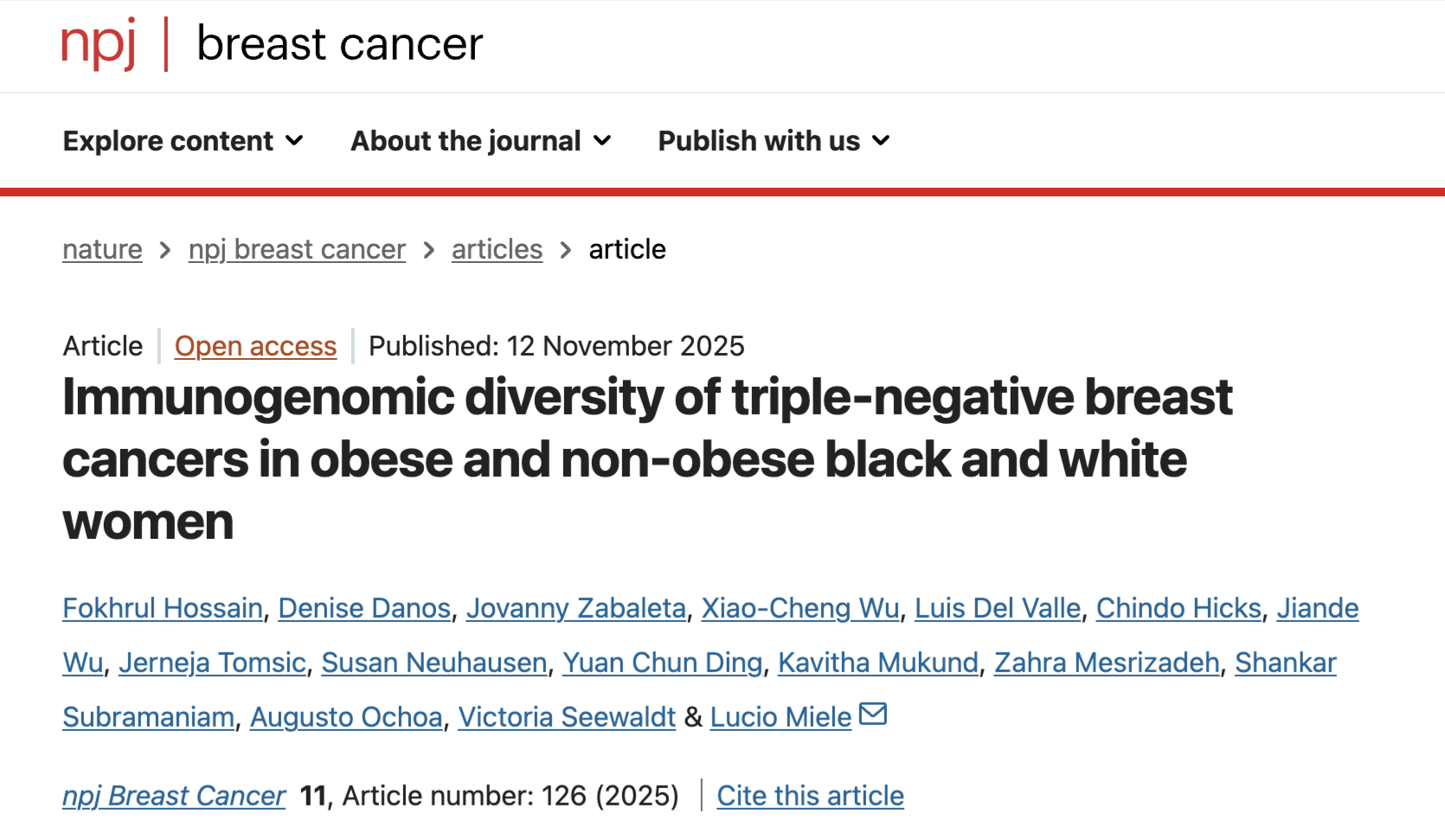
A groundbreaking new study funded by the National Cancer Institute (NCI) and published in npj Breast Cancer on November 12, 2025, offers fresh insights into the complex relationship among genetics, race, obesity, and immune response in triple-negative breast cancer (TNBC).

Led by Dr. Lucio Miele, LCRC Co-Director and Director of the LSU LCMC Health Cancer Center, along with Fokhrul Hossain and colleagues at LSU Health New Orleans, City of Hope Cancer Center (Duarte, CA), and the University of California, San Diego, the multi-institutional research team examined tumors from more than 250 Black and White women across Louisiana, focusing on how ancestry and body mass index (BMI) may influence cancer outcomes.
According to the Louisiana Tumor Registry at LSU Health New Orleans, triple-negative breast cancer is the 5th most common cancer diagnosed in women in Louisiana and comprises 15-20% of the state’s breast cancer cases. "Triple-negative breast cancer is one of the hardest cancers to treat because it lacks targeted therapies. It is not a single group of tumors. It's made up of many biologically different subtypes," Dr. Miele said. "By better understanding the genetic and immune landscapes of these tumors in Louisiana women, we can move closer to developing treatments tailored to each patient's biology improving survival and reducing healthcare gaps."
The study’s results challenge common assumptions: neither Black race nor obesity were inherently linked to poorer survival for women with TNBC in this diverse, well-matched sample. Instead, researchers found that molecular features of the cancer—especially those tied to stage and the biological aggressiveness of the tumor—played a much larger role than a patient’s race or BMI.
Perhaps most intriguing, the study identified a previously unrecognized group of TNBC tumors that displayed both luminal-like and stem-cell-like genetic profiles. These tumors did not cluster by race, appearing in both Black and White patients. This finding could steer future research into new, more precise treatment strategies for this aggressive type of breast cancer.
Another noteworthy discovery involved the tumor immune landscape: tumors from Black women showed a higher abundance of certain immune cell populations. While the reasons for this difference remain unclear, the study’s authors suggest it could have significant implications for personalized treatment approaches and call for further investigation.
With TNBC known to disproportionately affect Black women in the U.S. and boasting fewer targeted treatments, studies like this are essential for understanding the real drivers of disparity and finding better ways to deliver care. The complex interplay of genetics, tumor biology, and social factors continues to challenge scientists—and keep hope alive for more effective, personalized breast cancer therapies.
.png)